%20copy.png)
How to Spot Missing Shingles Before Leaks Start

A single missing shingle can expose the layer beneath your roof to rain, wind, and sunlight. In Cedar Grove, where winter weather, wind-driven rain, and summer storms all put roofing systems to work, knowing how to spot missing shingles can help you address damage before it becomes a ceiling stain, interior leak, or larger repair.
The key is to inspect from a safe position and look for changes in the roof's pattern, not just obvious bare patches. Asphalt shingles are designed to overlap in clean, consistent rows. When that pattern is broken, your roof may no longer be shedding water as intended.
How to Spot Missing Shingles From the Ground
Start with a walk around the property during daylight hours. Stand far enough back to see each roof slope, then use binoculars or your phone camera's zoom if needed. You should never climb onto a roof simply to investigate suspected damage. A steep, wet, aging, or storm-damaged roof can be unsafe even for an experienced homeowner.
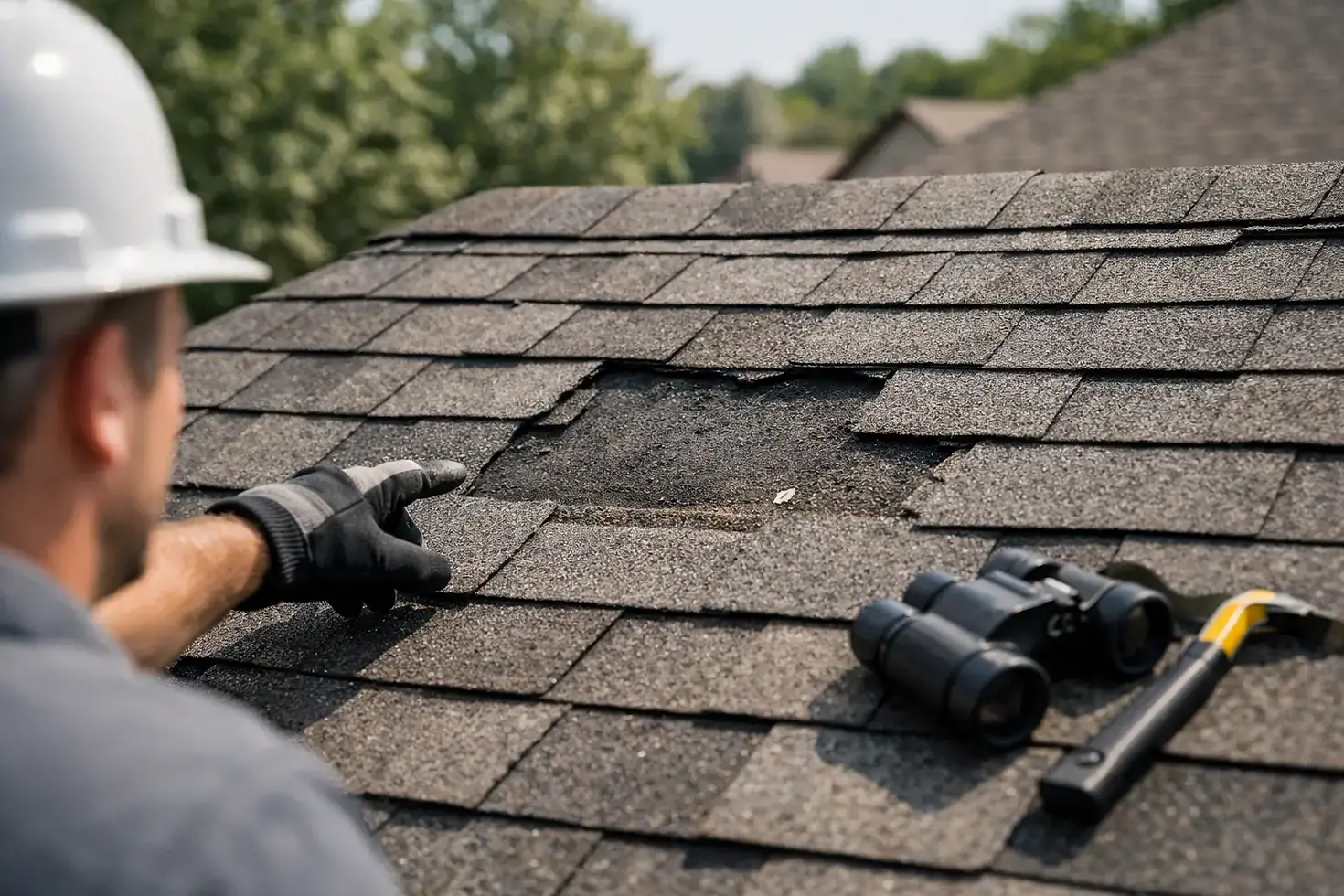
Look for an area where the roof deck, black underlayment, or a different-colored layer is visible. A missing shingle often creates a noticeable rectangle or irregular gap in an otherwise uniform field of shingles. On darker roofs, the exposed area may look like a black patch. On lighter or weathered roofs, it may appear as a sharp change in color or texture.
Also watch for shingles that are lifted, folded, torn, or hanging at an angle. They may not be fully missing yet, but they are vulnerable to the next strong wind. A shingle that has lost its seal can allow water beneath the roof covering, especially near edges, valleys, chimneys, skylights, and vent penetrations.
Roof damage is not always visible from every angle. Check the front, rear, and both sides of the building. If trees, dormers, or a second-story section block your view, do not make assumptions based on one roof slope alone.
Signs on the Ground That Shingles May Be Gone
Your yard and gutters can provide useful clues after a storm. Look for pieces of asphalt shingle in landscaping beds, on walkways, near downspouts, or along the driveway. These pieces may be curled, cracked, or coated with colored granules.
Granules are the rough, sand-like surface material that protects asphalt shingles from sunlight and weather. A small amount of granule loss is normal over time, particularly on older roofs. However, concentrated piles of granules at the bottom of downspouts or in gutters can signal shingle wear, storm impact, or deterioration that makes shingles more likely to detach.
Pay close attention after high winds. Wind damage may remove a full shingle, pull up only part of a shingle tab, or break the adhesive seal between courses. Detached shingles can travel farther than expected, so finding roofing debris in your yard does not always tell you exactly where it came from. It does tell you a closer professional inspection is warranted.
Check the Areas Where Damage Often Starts
Not every part of a roof faces the same level of exposure. Wind commonly affects roof edges, ridges, and corners first because those areas experience greater uplift pressure. Shingles along the eaves or rake edges may loosen before the center of the roof shows a problem.
Valleys deserve special attention. These are the channels where two roof slopes meet, and they handle a high volume of water during rain. Missing or damaged shingles in a valley can lead to leaks quickly because water is concentrated in one location.
Flashing areas are another concern. Check around chimneys, pipe boots, skylights, wall intersections, and roof vents for gaps, lifted shingles, or pieces that appear out of place. The shingles and flashing must work together to direct water away from these openings. A missing shingle near a penetration can be more urgent than a missing shingle in an open field of roofing.
If your home has a ridge vent, inspect the ridge line from the ground as well. Ridge cap shingles are specially formed pieces that cover the peak of the roof. If they are loose or missing, wind and rain can reach a particularly exposed part of the roofing system.
Indoor Clues You Should Not Ignore
A roof can have missing shingles without an immediate leak inside. Underlayment may temporarily keep water out, but it is not designed to serve as the permanent exterior surface. Waiting for visible interior damage often makes a simple repair more costly.
Still, the attic and upper floors can reveal early warning signs. After a heavy rain, look for water spots on ceilings, peeling paint near exterior walls, damp insulation, a musty odor, or staining on attic framing. Use a flashlight in the attic and look for darkened wood, wet insulation, or a path of daylight where there should be none.
Keep in mind that the point where water appears indoors may be several feet away from the roof opening. Water can travel along framing members, under insulation, or around pipes before it reaches a ceiling surface. That is why a professional evaluation should examine the entire affected roof area rather than patching only the spot beneath a stain.
Missing Shingles or Normal Roof Aging?
Roofing materials change as they age. Fading, minor surface granule loss, and slight color variation do not automatically mean shingles are missing. In some cases, what appears to be a gap from the ground is simply a shadow, a different shingle batch from an old repair, or a section obscured by debris.
The difference is whether the roof's protective layers remain intact. A missing shingle exposes the underlayment or roof deck. A cracked, curled, or heavily worn shingle may still cover the roof but can be nearing failure. Both situations deserve attention, but the right solution depends on the extent of damage, the roof's age, and the condition of the surrounding materials.
For example, replacing a few wind-damaged shingles can be a practical repair on a newer roof with plenty of service life remaining. If shingles are brittle across multiple slopes, repairs may not hold well or may create a patchwork appearance. In that case, a roof replacement can offer stronger long-term protection and better warranty coverage.
What to Do When You Find a Missing Shingle
Take clear photos from the ground and note the date, particularly if the issue followed a storm. Avoid using temporary materials such as loose tarps, tape, or exposed nails unless a qualified professional has advised you to do so. Improper temporary fixes can trap water, damage more shingles, or create another leak path.
If rain is expected and you see a clear opening in the roof covering, schedule an inspection promptly. A roofing professional can determine whether the damage is limited to shingles or involves underlayment, flashing, decking, ventilation, or nearby gutters. This matters because a repair that looks good from the ground may not protect the structure if the water-shedding details beneath it are compromised.
For commercial properties, missing shingles on sloped roof sections should be addressed with the same urgency. Small openings can affect insulation, interior finishes, inventory, and operations. Property managers benefit from documenting conditions and arranging repairs before moisture spreads into the building assembly.
Get a Professional Roof Assessment Before Damage Spreads
The safest way to confirm missing shingles is through a qualified roof inspection. An experienced contractor can identify wind damage, failed seals, cracked tabs, concealed moisture issues, and weak flashing that are difficult to see from the ground. They can also advise whether a targeted repair is appropriate or whether the roof is showing broader signs of age-related failure.
All Professional Remodeling Group provides trusted roofing solutions for Cedar Grove-area property owners who want durable repairs, clear recommendations, and workmanship built to protect their investment. When a roof's protective pattern is broken, acting early gives you the best chance to keep a small issue from becoming a larger one.


Comments