%20copy.png)
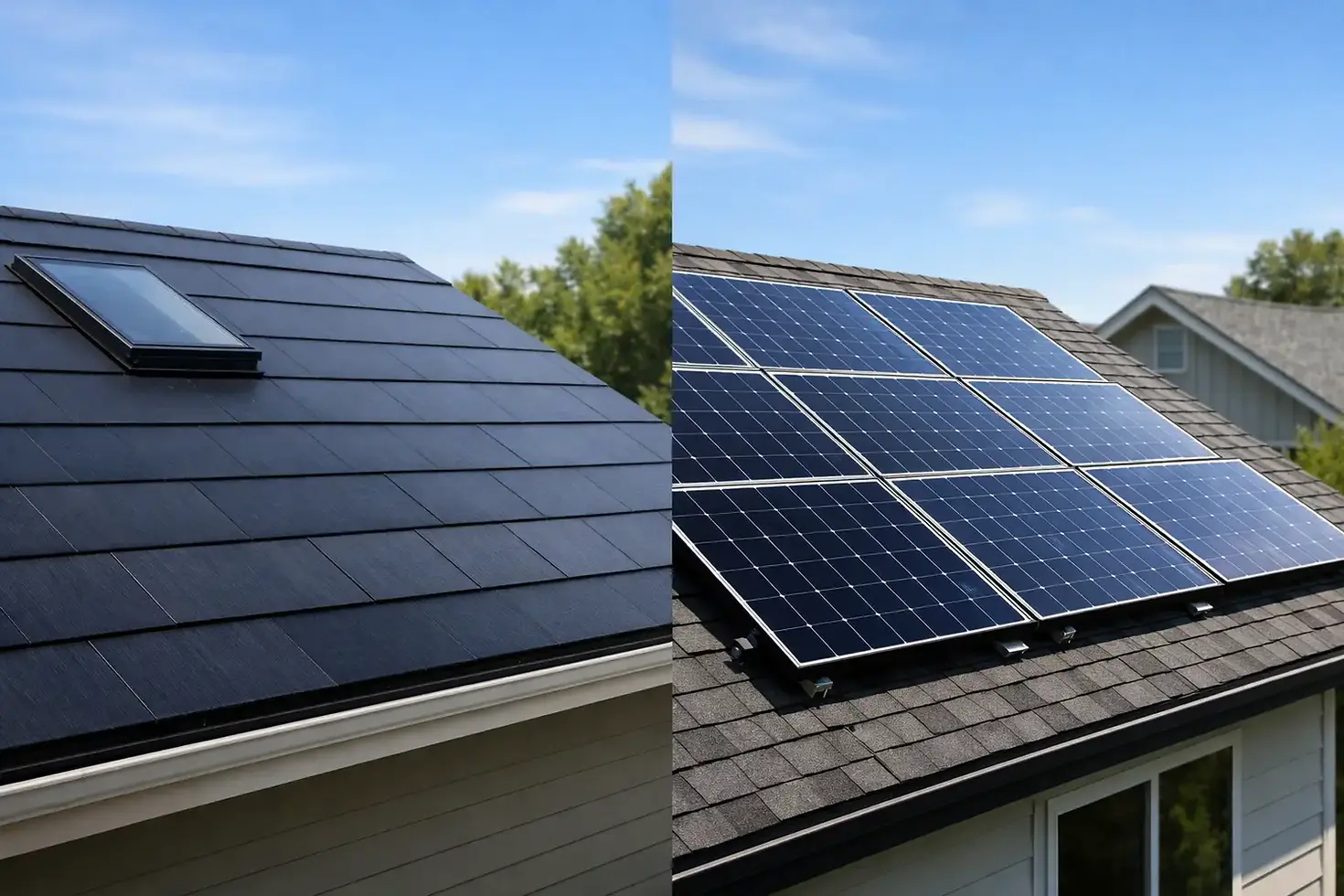
Solar Shingles Versus Solar Panels: Which Fits?

A roof nearing the end of its service life creates a rare opportunity: you can replace the roofing system and consider solar power as part of one carefully planned project. When comparing solar shingles versus solar panels, the right choice is not simply about which product generates electricity. It is about your roof condition, available sunlight, budget, design preferences, and the level of long-term protection you expect from the installation.
For many Cedar Grove-area homeowners, conventional solar panels remain the most direct path to higher energy production. Solar shingles can be a strong alternative when a roof replacement is already needed and a low-profile appearance matters as much as energy generation. Both can add value, but they solve different problems.
Solar Shingles Versus Solar Panels: The Main Difference
Traditional solar panels are photovoltaic modules installed above an existing roof covering. They sit on a racking system, usually a few inches above the shingles, and connect to an inverter that converts solar energy into usable household electricity. A qualified installer evaluates roof structure, orientation, shading, electrical capacity, and attachment details before installation.
Solar shingles, often called solar roofing, are smaller photovoltaic units integrated into a new roofing system. Products such as GAF Timberline Solar Shingles are designed to work with compatible asphalt shingles, creating a more uniform roofline than rack-mounted panels. They replace part of the roof surface rather than being mounted over it.
That distinction affects nearly every part of the decision. Panels are primarily an energy system attached to a roof. Solar shingles are a roofing and energy system planned together.
Appearance and Curb Appeal
Solar shingles have a clear advantage for homeowners who want solar without the visual profile of conventional panels. From the street, they blend more closely with the surrounding roof and can preserve the clean appearance of a home with a prominent front-facing roofline. This can be especially appealing for homeowners investing in siding, windows, gutters, or other exterior improvements at the same time.
Conventional panels are more visible, although modern systems are far more streamlined than older installations. On many homes, panels can be positioned on rear-facing roof planes or less visible sections of the roof. If your priority is maximum energy production at the most practical cost, visibility may be an acceptable trade-off.
Appearance is personal, but it should not be the only deciding factor. A solar roof must still provide dependable water protection, proper flashing, ventilation, and a finished look that complements the rest of the exterior.
Cost Depends on the Condition of Your Roof
If your asphalt roof is relatively new, solar panels are usually the more economical option. The panels can be installed over a sound roofing system without paying for a full replacement just to add solar. That makes the initial project scope more straightforward.
If your roof is aging, leaking, storm-damaged, or already scheduled for replacement, the calculation changes. Installing panels on a roof that may need replacement in a few years can create added expense later because the panels may need to be removed and reinstalled when roofing work is performed. In that situation, solar shingles may make sense because the roofing and solar portions are completed as one coordinated system.
Solar shingles often carry a higher upfront investment per watt of electricity produced than traditional panels. Homeowners should also understand that pricing depends on roof complexity. Multiple valleys, steep slopes, chimneys, skylights, dormers, limited usable roof area, and electrical upgrades can all affect the final proposal.
A reliable estimate should separate roofing costs, solar equipment, electrical work, permitting, and any necessary structural or ventilation improvements. That clarity helps you compare long-term value rather than focusing only on the first number presented.
Power Production and Roof Space
Traditional solar panels generally produce more electricity per square foot than solar shingles. Their larger modules and installation flexibility allow a designer to place panels where sun exposure is strongest. For a household with high electric use, an electric vehicle, a pool, or plans to switch to electric heating equipment, panels may be the better way to maximize output from limited roof space.
Solar shingles can still make a meaningful contribution to your energy needs, but not every roof plane is suitable for active solar roofing. North-facing slopes, heavily shaded areas, sections interrupted by vents, and complex roof geometry may limit the area available for energy production. Standard shingles are installed in areas where solar units do not make practical sense.
Neither system should be sold with a blanket promise of eliminating an electric bill. Production changes with season, weather, shading, roof orientation, utility rates, household usage, and available incentives. A proper solar evaluation should review your actual electrical consumption and set realistic expectations for annual output.
New Jersey weather considerations
New Jersey roofs need to handle wind-driven rain, snow, freeze-thaw cycles, summer heat, and falling debris. Solar equipment must be installed with the same attention to detail as the roofing system beneath it. Improper penetrations, weak flashing details, or poor drainage planning can turn an energy upgrade into a water-intrusion risk.
Panels are elevated above the roof, which allows airflow beneath them and may help manage heat. Solar shingles sit closer to the roof surface and are part of the overall roofing assembly. Either option can perform well when it is designed for the property and installed according to manufacturer requirements.
For homes with heavy tree cover, trimming or removing overhanging branches may improve solar access while also reducing debris accumulation and roof wear. In some cases, however, the amount of shade makes solar a poor investment regardless of the product selected. An honest contractor should say so.
Installation, Repairs, and Future Roofing Work
The most important question is often not which solar product looks better. It is who will take responsibility when the roof, solar equipment, and electrical work meet.
A standard panel system requires careful roof attachments and flashing. If a roof repair is needed beneath or near the array later, the panel system may need partial removal before the roofing issue can be addressed. This does not make panels unreliable, but it makes roof condition especially important before installation.
Solar shingles require close coordination because the solar components are integrated into the new roof. A contractor needs proven roofing expertise, product-specific training, and a clear process for managing electrical connections, inspections, and manufacturer requirements. Repairs should also be handled with an understanding of both the roofing system and the solar components.
Before signing a contract, ask who is responsible for the roof installation, solar design, electrical work, permits, utility coordination, inspections, and warranty service. A fragmented project involving several unrelated companies can leave homeowners caught between installers if a problem arises. A coordinated exterior contractor can provide clearer accountability from the first roof tear-off through final completion.
Warranties and Long-Term Protection
Warranty coverage should be reviewed line by line. Roofing materials, solar modules, inverters, workmanship, and power production can each have different terms and different responsible parties. A long manufacturer warranty is valuable, but it does not replace quality installation.
Look for a contractor that can explain what is covered, what maintenance is expected, and how a future service request is handled. Manufacturer credentials also matter. They can reflect access to approved installation methods and stronger warranty options for qualifying roofing systems.
At All Professional Remodeling Group, solar roofing is approached as part of a complete roof replacement strategy, not as an add-on that compromises the protection of your home. That means evaluating the roof deck, ventilation, drainage, flashing, and exterior details before recommending an integrated solar solution.
Which Option Is Right for Your Property?
Solar panels are often the best fit when your roof has many years of service life remaining, you have strong sun exposure, and you want the most production for your available budget and roof area. They are a practical, established choice for homeowners focused primarily on energy output.
Solar shingles are often the better fit when you already need a new roof, prefer a more integrated appearance, and want one project that improves weather protection and produces electricity. They can be particularly compelling for a high-visibility roof where conventional panels would change the look of the home.
The best next step is a roof-first evaluation. Confirm that the structure is sound, identify shade and usable roof planes, review your current electric use, and compare the complete installed cost of each option. A solar decision should protect your home for decades, not just improve the next utility bill.


Comments