%20copy.png)
How Should Homeowners Prepare Their Roofs for Fall in Cedar Grove, NJ?

Fall roof prep kind of comes down to four jobs: clear the debris sitting in the valleys, check the flashing around chimneys and vents, confirm the attic is breathing, and get the roof inspected before the hard freezes show up.
We do that inspection free as a certified roofing contractor in Cedar Grove, NJ, and we've been family-owned since 1996, so we've watched what a wet October does to a roof that went into it with a lifted shingle nobody caught. Autumn doesn't break roofs on its own, not really. It just finds what summer already loosened, then adds water and cold to it.
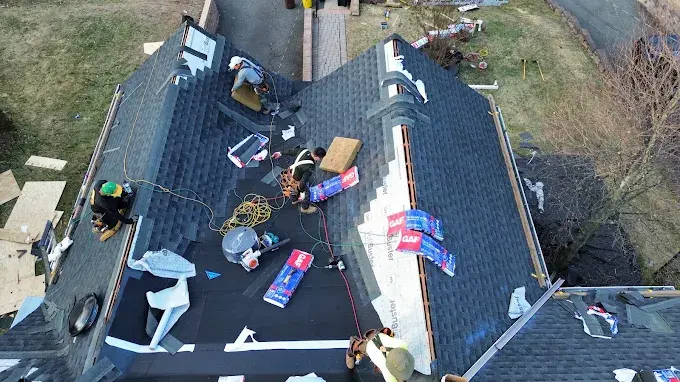
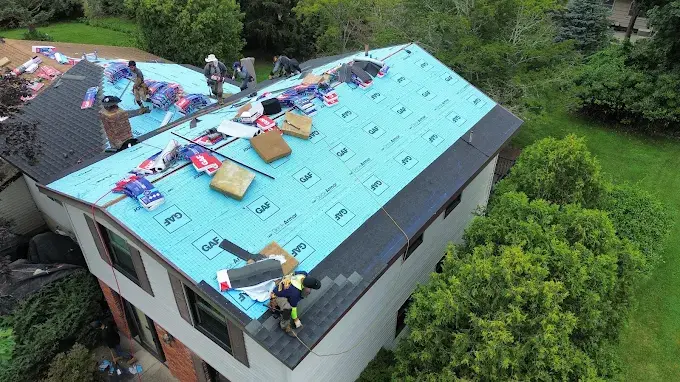
Our crews walk the whole roof before anyone writes a quote, which is how we can tell you that a section needs roof repair rather than a replacement. When a repair is enough, we just say so. Ask whoever inspects your roof to show you what they found, and maybe notice whether they can actually point at it.
What Does a Fall Roof Check Actually Cover?
A proper check starts at the parts of the roof that move water, not the parts that look worn. Valleys carry the highest volume of runoff on a sloped roof, so they get looked at before anything else, along with the flashing where the roof meets a chimney, a vent stack, or a wall.
Those joints are sealed with metal and sealant rather than shingles, and sealant gives out years before the shingles above it do. A hairline gap there won't leak in a summer shower, but it will in a November downpour that runs for six hours.
After the water paths, the check moves to the field of the roof. That means lifted or missing shingles, granule loss heavy enough to expose the mat underneath, nail heads that have backed out, and any soft spot underfoot that suggests the decking has taken on moisture.
A roof can look uniform from the driveway and still have three or four small failures that only show up when someone is standing on it (which is a bit unnerving, honestly). Knowing where those sit before winter is what keeps a simple residential roof repair from turning into a decking job in February.
When Is the Right Time to Prepare a Roof in Cedar Grove, NJ?
Late September into October is the window that works in Essex County. The weather is dry enough for sealant and shingle adhesive to cure properly, the leaves haven't finished dropping, and there's still room in the calendar before the freeze sets in.
Work done in that stretch has time to settle before it gets tested, which is kind of the whole point of preventative roof maintenance.
Waiting until the trees are bare feels tidier, sure, but it's a mistake. Once temperatures drop below the range shingle adhesive needs, repairs that would have bonded in October just sit loose through the winter.
Frozen debris also stops behaving like debris and starts behaving like a dam, holding meltwater against the roof surface instead of letting it run off. Homeowners who book in early autumn get the repair done properly, while the ones who book in December get whatever can be done in the cold.
Which Parts of a Roof Fail Soonest in Autumn Weather?

Flashing is almost always the part that goes before anything else. It sits at the joints where two surfaces meet, it expands and contracts at a different rate than the material around it, and it carries water that's already been concentrated by the slope above.
A chimney that's been dry for eleven years can start staining a bedroom ceiling in one wet autumn because the counter flashing finally opened up. That's a big part of why roof flashing matters, even if you barely notice it from the street.
Valleys are next in line, and for kind of a related reason. Two planes of roof funnel into one channel, so the volume there is several times what any other part of the roof handles. Add wet leaf litter, and that channel just stops draining at the speed it was built for.
Water backs up under the shingle edges, sits there, and works its way to the underlayment. Nothing about this is dramatic while it happens. The evidence usually shows up as a stain months later, which is the frustrating part.
Noticed a ceiling stain or a lifted shingle near the chimney this fall? Give us a call at (973) 857-9449, and we'll set up a free inspection before the weather turns.
What Can a Homeowner Check Without Climbing Anything?
Most of what matters can be seen from the ground with a decent pair of eyes and from inside the attic with a flashlight. Neither one requires a ladder, and we'd honestly rather you stayed off the roof entirely. Ladders put more people in the emergency room every autumn than roofs do.
Here's what's worth looking at before you call anyone.
Shingle line. Walk the perimeter of the house and look along the roof edge for shingles that sit higher than their neighbors or curl at the corner.
Granules at the downspout outlet. A coffee cup's worth of dark grit after a heavy rain is normal on a new roof and a warning on a fifteen-year-old one.
Ceiling and wall stains. Check the upstairs rooms and any closet that backs onto an exterior wall, especially after a long rain.
Attic in daylight. Lights off, look for daylight coming through the roof deck and for dark staining on the rafters near the chimney.
Attic smell. A damp or musty smell in a closed attic means moisture is getting in or just isn't getting out.
Any one of those is worth a call. If you're not sure what you're looking at, just contact us and describe what you saw. Two or more in the same season usually means the roof has more going on than a single repair will settle.
What Should Be Left to a Crew?
Anything that involves standing on the roof, basically, and anything that involves sealant.
Homeowners who reseal their own flashing almost always use the wrong product, apply it over dirt and old failed sealant, and buy themselves one dry season before the joint opens again wider than it was. The repair then costs more than it would have, because the old material has to come off before anything new goes on.
Attic ventilation is the other one worth handing over. Getting the intake and exhaust balanced is kind of counterintuitive, and adding exhaust vents without matching intake makes the problem worse rather than better.
That balance drives shingle temperature, moisture buildup, and how your roof handles snow load, which is why we treat it as part of a roof job rather than an extra.
How Does Fall Work Prevent Winter Leaks?
Winter roof failures are mostly autumn problems that were left alone. An ice dam forms when heat escaping into the attic melts snow on the upper roof, the meltwater runs down to the cold eave, and it refreezes there into a ridge that holds the next round of water behind it.
That standing water then finds the weakest seam it can reach. If the flashing was already open in October, that's where it goes.
Clearing debris, sealing the joints, and fixing the ventilation in autumn removes most of the conditions an ice dam needs. It doesn't make a roof immune, because a heavy snow followed by a thaw and a hard refreeze will test any roof in New Jersey. It does mean the water has nowhere easy to get in.
Frequently Asked Questions
Does a roof need to be cleared every fall?
Yes, if there are trees anywhere near the house. Leaf litter holds moisture against the roof surface and blocks the valleys that carry the most water. On a property with no overhanging limbs, every other year is usually enough, though the valleys still deserve a look.
How long does a fall roof inspection take?
A residential inspection usually runs under an hour for a standard sloped roof. Larger or steeper roofs take longer, and a roof with an active leak takes longer still. That's because the source is often some distance uphill from where the stain appears inside.
Is it too late to prepare a roof in November?
Not for an inspection, which can happen any time the roof is dry and safe to walk. Repairs are the issue, because shingle adhesive and most sealants need temperatures above a certain range to bond. Work booked in November may get scheduled around the weather rather than at your convenience.
Will an inspection void a manufacturer warranty?
No. An inspection by a certified contractor doesn't affect coverage. Repairs done incorrectly by an uncertified installer can, which is one reason our GAF Master Elite status matters on qualifying roof systems. Ask any contractor to confirm their certification before work starts.
Contact Us
Serving Cedar Grove, Verona, and North Caldwell, here's how to reach our team.
Address: 80 Lakewood Ave, Cedar Grove, NJ 07009
Phone: (973) 857-9449
Email: info@roofingpronj.com
Office Hours: Monday to Sunday, 24 hours
Contact us to book your free roof inspection before the freeze hits, and we'll quote only the work that needs doing.
Related Topics:

Comments